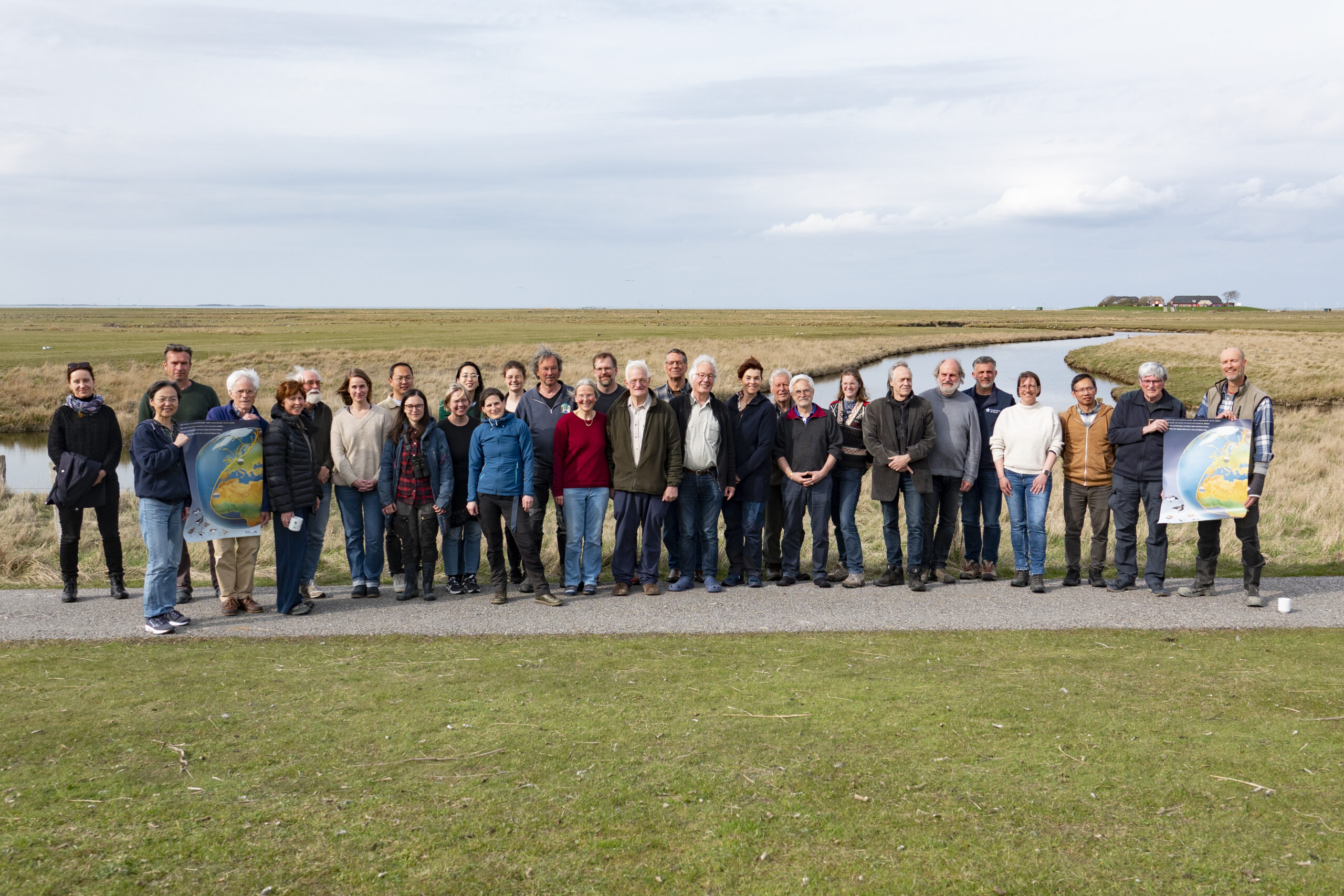
From April 16–20, VISION 52, WWF and SCHUTZSTATION WATTENMEER convened the 4th East Atlantic Flyway Seminar on Hallig Langeneß — a truly unique setting in the heart of the Biosphäre Halligen, surrounded by the Schleswig-Holstein Wadden Sea National Park and the trilateral Wadden Sea World Heritage Site.
Over five intensive days, 30 experts from eight countries — representing governmental and non-governmental conservation, marine biology, ornithology, anthropology, sedimentology, modelling, coastal engineering, administration, and communication — worked together on a shared challenge:
How can the most important coastal bird habitats along the East Atlantic Flyway, from the Arctic through the Wadden Sea to West Africa, be better protected in the future?
A key focus was on developing forward-looking scenarios to safeguard tidal flats under the pressure of climate-driven sea level rise. Discussions explored how these fragile ecosystems can be preserved despite accelerating environmental change.
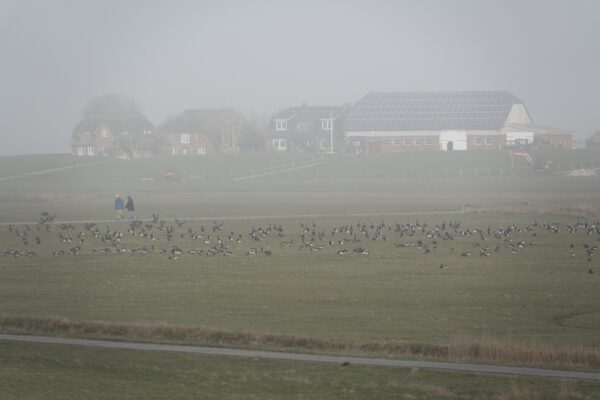
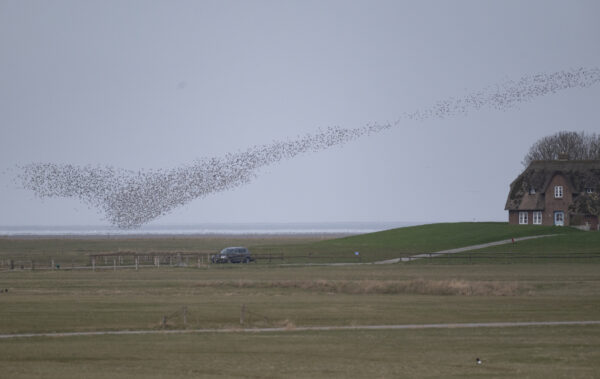
The seminar took place at the peak of spring migration, when tens of thousands of Arctic coastal birds gather in the Wadden Sea to build up vital energy reserves for their journey north. Among them were large flocks of Brent Geese, Red Knots, and Bar-tailed Godwits — offering participants a powerful, immediate connection to the flyway’s ecological importance.
A special highlight was the participation in the opening of the 27th “Ringelganstage” on the neighbouring Hallig Hooge. Together with local residents and representatives of the Biosphere Halligen, the National Park, and conservation organisations such as WWF, Schutzstation Wattenmeer, NABU, and Verein Jordsand, participants celebrated the region’s unique natural heritage.
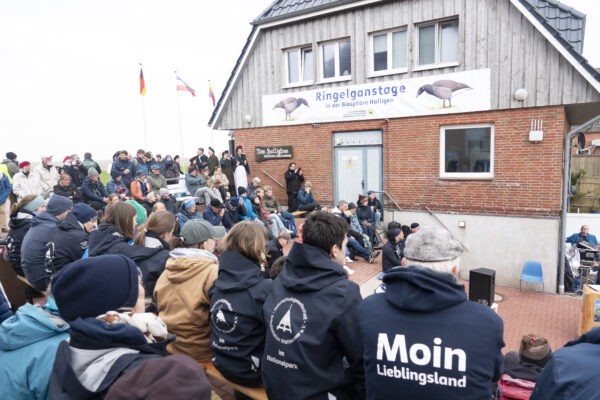
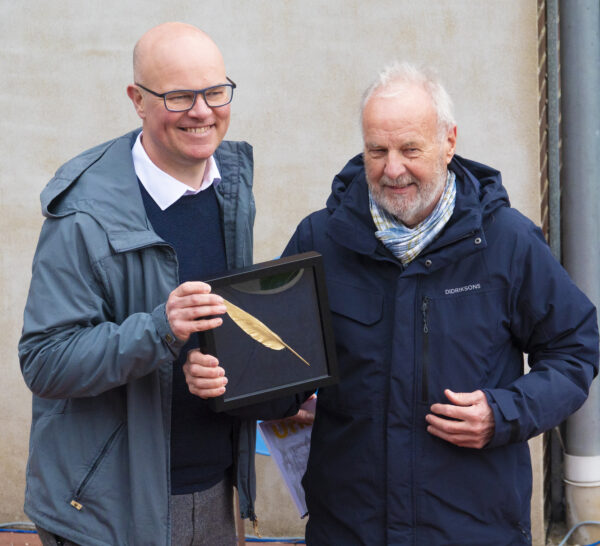
This year, the “Golden Brent Goose Feather” award, presented by Schleswig-Holstein’s Environment Minister Tobias Goldschmidt, honoured Peter Horstmann, a key initiator and architect of the Hallig Programme.
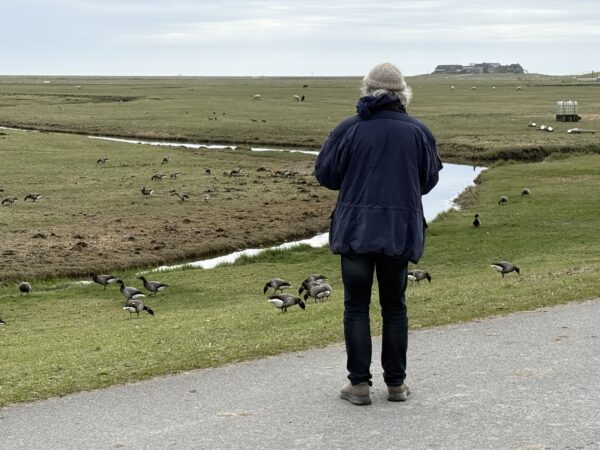
Participants were particularly struck by what many described as the “National Park effect”: Brent Geese, once highly wary due to hunting, have largely lost their fear of humans. Today, they can be observed at close range — a powerful symbol of a restored balance between people and nature.
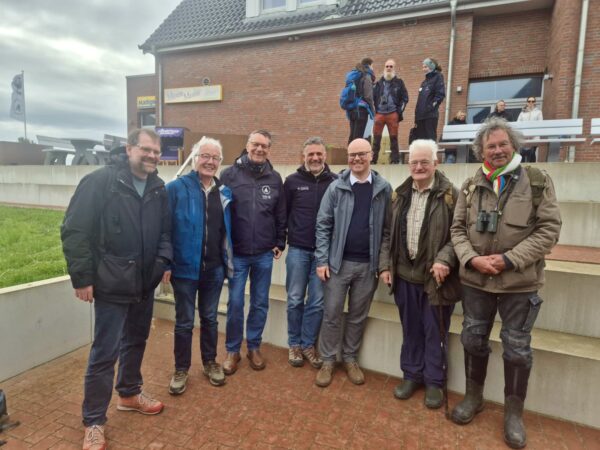
Innovative ideas for future coastal protection strategies were presented, especially by experts from France, England, and the Wadden Sea region. A recurring theme was the need to move away from rigid coastal defences toward more dynamic, nature-based solutions — restoring gradual transitions between land and sea instead of maintaining hard boundaries.
The outcomes of the seminar will contribute to a forthcoming publication:
“The East Atlantic Flyway of Coastal Birds – Perspectives and Visions”, a forward-looking volume planned for release in German later this year, followed by an English edition. Here you find the list of presentations held at the seminar
The seminar once again demonstrated that international collaboration, grounded in science and inspired by place, is essential to securing the future of migratory coastal birds along one of the world’s most important flyways.