
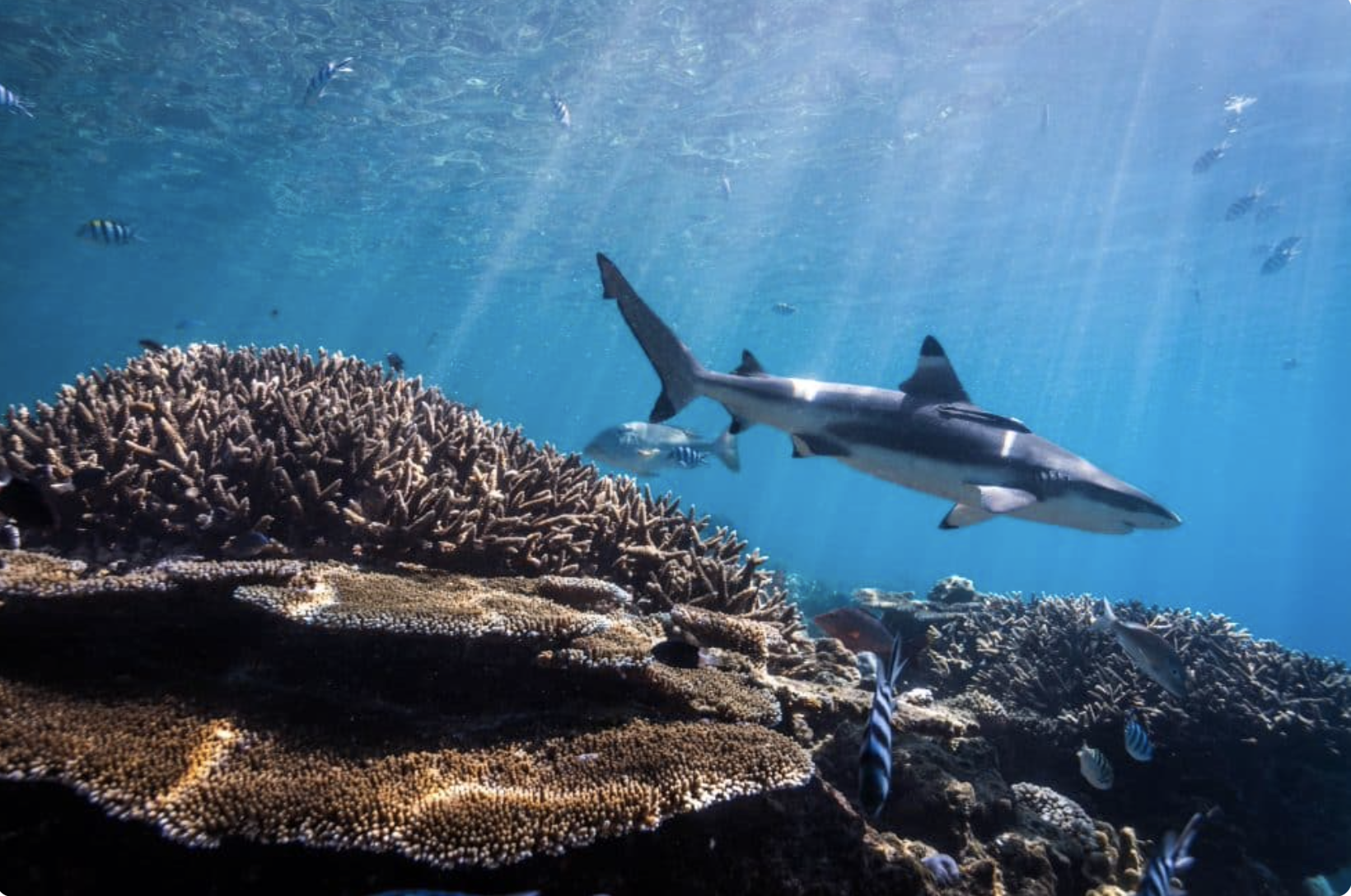
Marine animals may be responsible for more than half of all the carbon stored long-term in the deep ocean. A living ocean is essential for a stable climate.
Marine animals – Sharks, Whales, Fish, and other marine life – power the ocean’s Biological Carbon Pump, moving carbon into the deep sea where it can stay locked away for centuries. Yet industrial fishing, exacerbated by governance that encourages extraction, is quietly undermining the powerful natural system – around 40% of assessed stocks are fished to unsustainable levels.
For World Ocean Day, the Global Rewilding Alliance launched a new report, Fisheries and Marine Carbon Processes in the Context of Climate Change, produced with the International Institute for Sustainable Development led by Martin Miquel Pedersen.
The report points to real pathways forward, from stronger Marine Protected Areas to ecosystem-based fisheries management, and profiles Alliance Partners already putting them into practice. Chumbe Island Coral Park in Zanzibar, for one, has seen fish biomass increase nearly eightfold since becoming the world’s first self-financing marine sanctuary. Their work brings abundance to local communities as well as supporting global fisheries and the carbon cycle that we all depend on.
The message is clear and increasingly hard to ignore: a thriving ocean is essential climate infrastructure. Restoring marine life and rethinking fisheries governance belong at the centre of climate policy, not the margins.