The new Andfjorden Marine Protected Area is an important step forward. But Norway must now turn protection on paper into effective conservation at sea — and seize the opportunity to secure a future free of oil and gas exploitation for Lofoten, Vesterålen and Senja.
A significant step for marine conservation
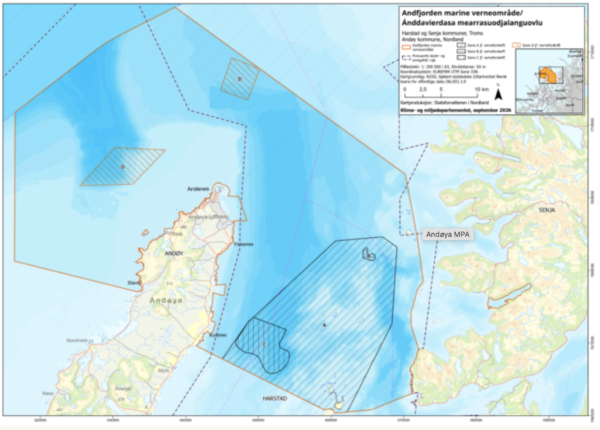
On 18 September 2026, the Norwegian government established the Andfjorden Marine Protected Area, covering 1,848.5 km² of coastal and marine waters between Nordland and Troms. It is now Norway’s largest marine protected area.
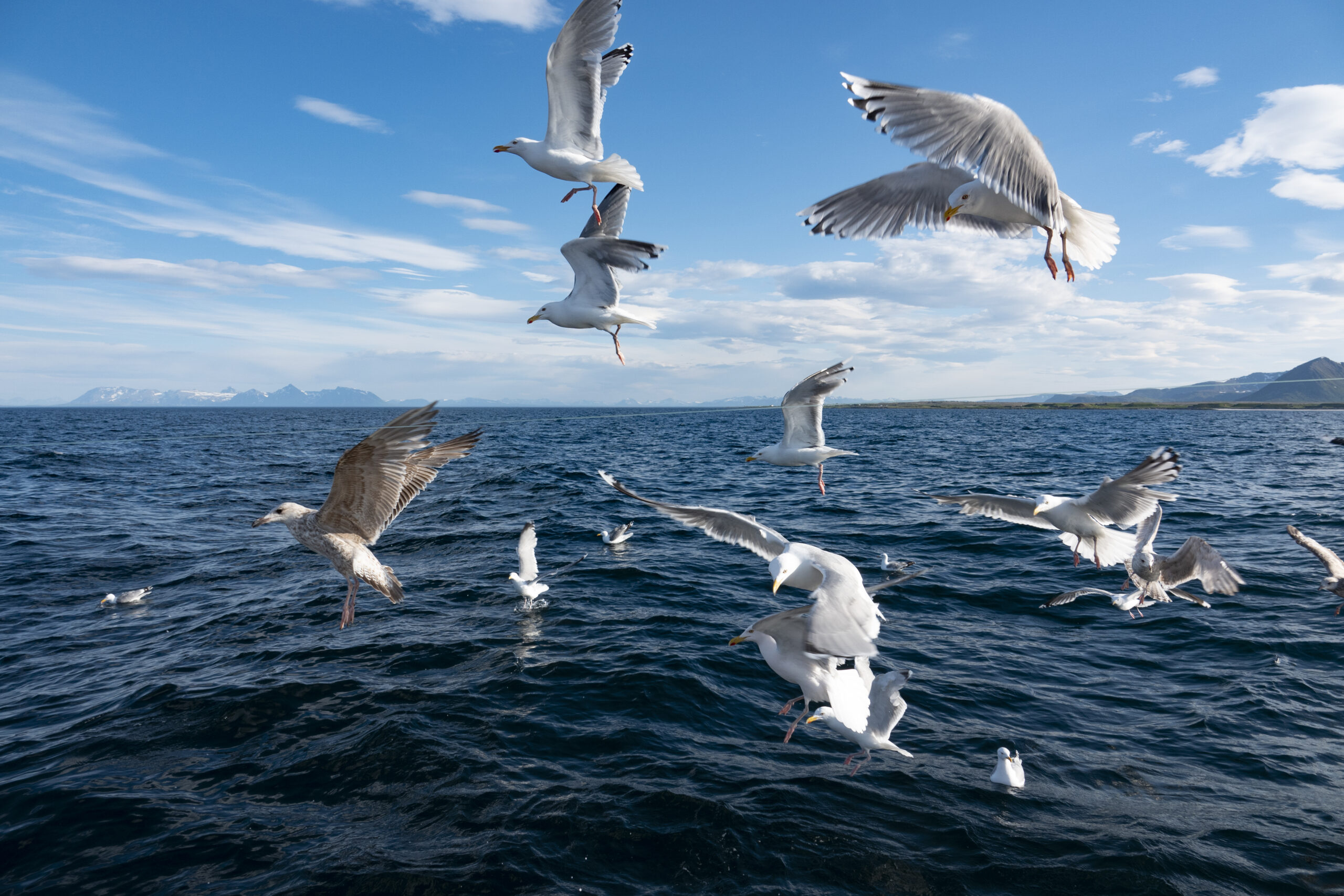
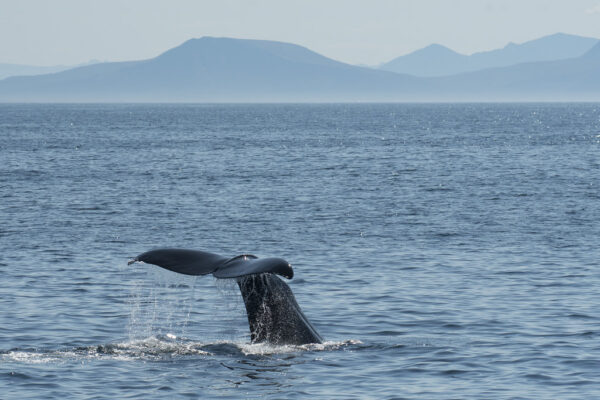
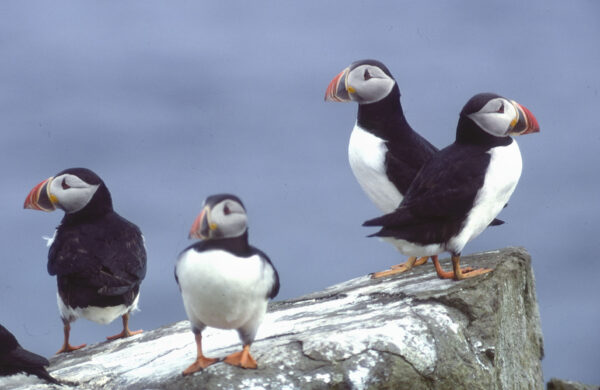
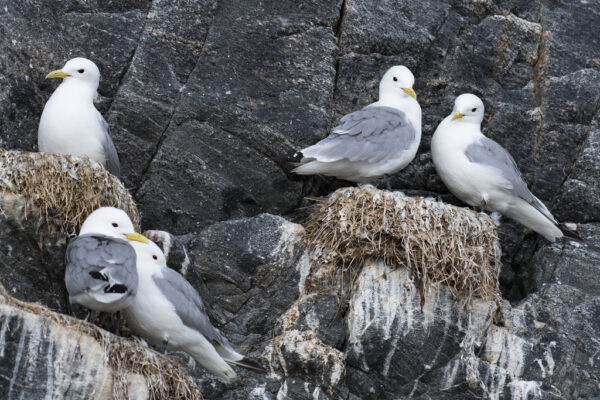
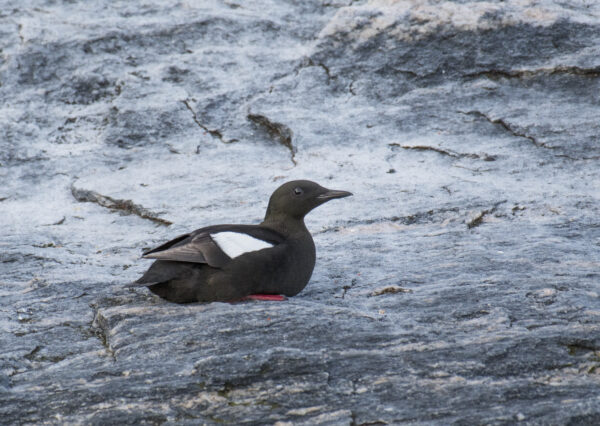
The area encompasses an extraordinary variety of underwater habitats, including coral reefs and gardens, sponge communities, kelp forests and deep-water environments. These habitats support rich marine biodiversity, providing important spawning, nursery and feeding grounds for fish, as well as habitat for whales and seabirds.
The designation increases the proportion of mainland Norway’s territorial waters under formal protection from approximately 4.8% to 6%. This is welcome progress, and an important recognition of the ecological value of Norway’s coastal waters.
Norway is still far behind the 30×30 ambition
Nevertheless, this achievement must be seen in a broader context.
Norway has a considerable backlog when it comes to marine conservation. While the country advocates ambitious global biodiversity targets, it remains far from achieving the internationally agreed 30×30 target: conserving at least 30% of the world’s land and sea areas by 2030.
At present, only a small proportion of Norway’s marine waters enjoys formal protection. Increasing the protected share of mainland territorial waters to 6% is a step in the right direction, but it remains a long way from 30%. Moreover, these figures refer to territorial waters, not the entirety of Norway’s extensive marine jurisdiction.
There is an even more fundamental question: What does protection actually mean for nature?
Protection on paper is not enough
Designating an area as protected does not automatically ensure that its ecosystems can recover from human pressures.
A marine protected area may still permit activities that disturb or damage marine habitats. The real conservation value therefore depends on its regulations, the activities permitted, the effectiveness of enforcement and the ecological outcomes achieved.
Norway has made progress in establishing protected areas, but genuinely protected marine zones remain exceptionally scarce. A recent scientific assessment of Norwegian marine protected areas found that almost all the area assessed offered only minimal protection, light protection or protection levels incompatible with conservation objectives. Fully protected areas accounted for just 0.1% of the total protected-area coverage assessed, equivalent to approximately 0.004% of Norway’s marine waters.
No-take zones, where fishing and the extraction of marine resources are prohibited, are particularly important. They allow marine ecosystems to recover with minimal direct human interference and can help rebuild fish populations, restore ecological processes and strengthen ecosystem resilience.
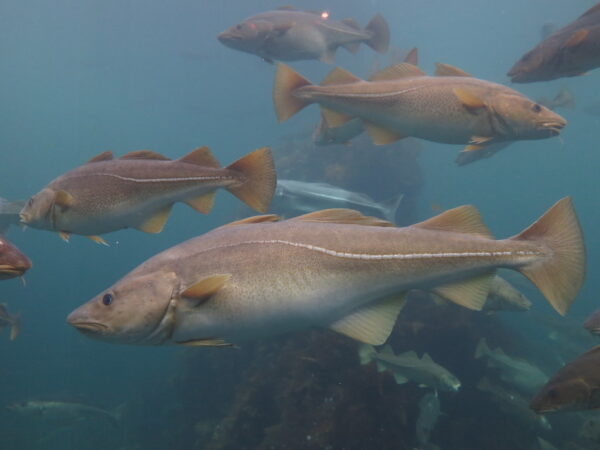
Even Norway’s largest marine national park, including “Raet”, in southern Norway, lacks the kind of comprehensive no-take protection needed to leave marine nature undisturbed.
The challenge is therefore not simply to designate more protected areas. It is to establish areas where nature receives genuinely effective protection.
An opportunity to secure a future free of oil and gas for LoVeSe
Despite these reservations, the establishment of Andfjorden Marine Protected Area is an encouraging development. It demonstrates that important marine areas can be protected and may help generate momentum for more ambitious conservation measures.
This is particularly relevant to the neighbouring region of Lofoten, Vesterålen and Senja — commonly known as LoVeSe.
The region is internationally renowned for its spectacular coastal landscapes, productive marine ecosystems, seabirds, whales and fisheries. Its ecological significance and natural beauty make it a compelling candidate for long-term, integrated conservation.
Yet the future of LoVeSe continues to be linked to the wider political debate about oil and gas exploration and exploitation in Norwegian waters.
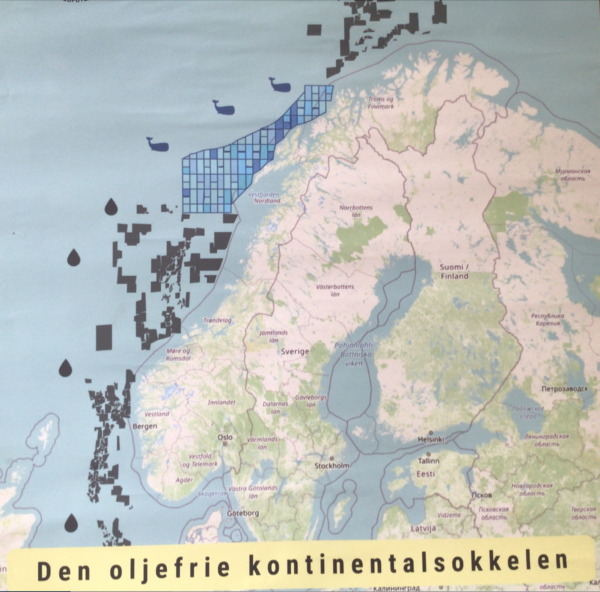
The establishment of Andfjorden Marine Protected Area offers an opportunity to strengthen the argument for a different future: one in which the region’s extraordinary natural heritage, sustainable fisheries and nature-based tourism take precedence over new petroleum development.
Formal marine protection alone will not guarantee that outcome. A lasting commitment to keeping LoVeSe free from oil and gas activities requires additional political and conservation measures.
A UNESCO biosphere region as the next step?
One promising avenue would be to explore the establishment of a UNESCO biosphere reserve encompassing the wider Lofoten–Vesterålen–Senja region.
Biosphere areas, designated under UNESCO’s Man and the Biosphere Programme, seek to reconcile biodiversity conservation with sustainable development. They bring together ecological protection, scientific research, education and the interests of local communities.
A biosphere area would not automatically prohibit oil and gas activities, nor would its designation replace the need for legally binding marine protection. Its value would lie in providing a broader framework for regional cooperation and a shared long-term vision.
Such an initiative could help strengthen the regional identity of LoVeSe as a landscape and seascape whose future depends on healthy marine ecosystems, sustainable livelihoods and the preservation of its unique natural values.
Combined with stronger marine protection, effective no-take zones and a clear political commitment to keeping the region free from oil and gas exploitation, a UNESCO biosphere area could become an important part of a more comprehensive conservation strategy.
From formal designation to effective protection
VISION 52 welcomes the establishment of Andfjorden Marine Protected Area as a positive step for Norwegian marine conservation. But Norway must now move beyond counting protected square kilometres and focus on what protection actually achieves.
The priorities should be clear:
-
- Accelerate marine conservation to bring Norway closer to the 30×30 target.
-
- Strengthen protection standards, ensuring that designated areas safeguard ecosystems in practice, not just on paper.
-
- Establish more no-take zones where marine nature can recover without extractive activities.
-
- Secure a future free of oil and gas exploitation for LoVeSe, using regional cooperation and appropriate conservation instruments.
-
- Explore a UNESCO biosphere reserve as a framework for integrating nature conservation and sustainable development across Lofoten, Vesterålen and Senja.
The new protected area is a reason for optimism — but not for complacency.
The next step should be to build on this achievement and demonstrate that Norway is prepared to match its international conservation ambitions with effective action at home.
VISION 52 calls for marine protection that makes a real difference — and for a future in which the unique natural heritage of LoVeSe is safeguarded for generations to come.