Teamwork across continents highlights urgency and hope
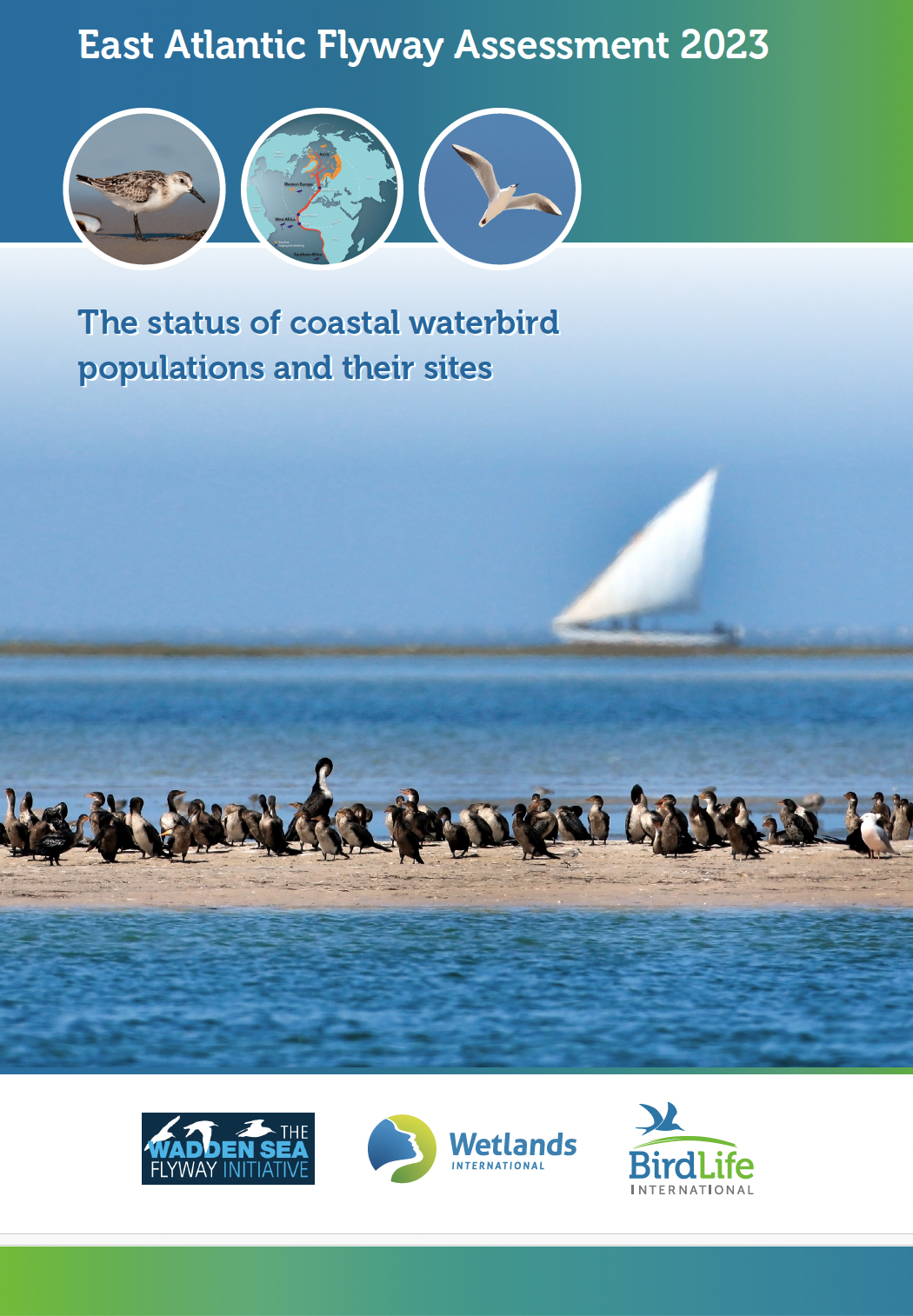
After the first assessment from 2020 was already a landmark, the newly released East Atlantic Flyway Assessment 2023 represents a major step forward in our understanding of migratory waterbirds and the vast chain of sites they depend on. Developed through the close partnership of the Wadden Sea Flyway Initiative, Wetlands International and BirdLife International, the report brings together knowledge from across continents into one coherent and powerful picture.
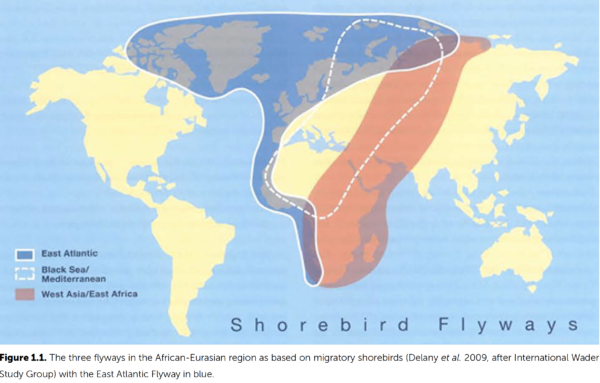
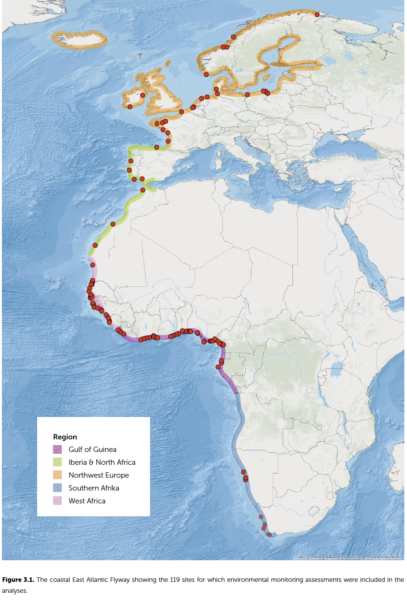
Spanning from Arctic breeding grounds to the coasts of West and Southern Africa, the East Atlantic Flyway is one of the world’s great ecological systems. It links habitats, species and people across more than 35 countries. What happens in one place along this route can have consequences thousands of kilometres away, making conservation along the flyway both a shared responsibility and a collective challenge.
More than a third of populations are in decline, but around 42% are increasing
. The assessment delivers a nuanced message. Over the long term, many populations have shown resilience, with around 42% increasing. Yet this positive picture is increasingly overshadowed by more recent developments. Short-term trends are deteriorating, and more than a third of populations are now in decline. Particularly worrying are the shorebirds that breed in the Arctic and winter in Africa, which appear to be under mounting pressure across multiple stages of their life cycle.
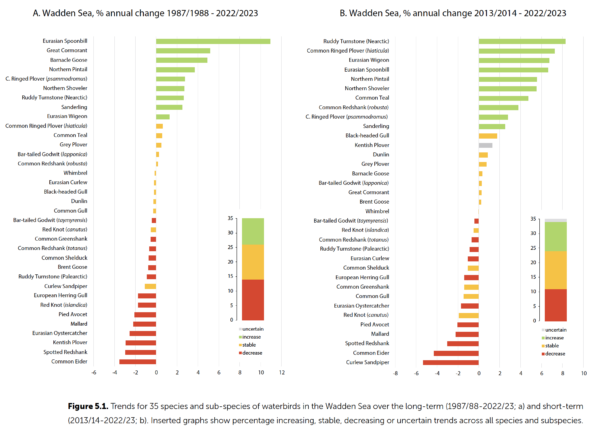
These trends reflect a combination of pressures that are intensifying along the flyway. Coastal development, habitat loss, overfishing, disturbance and climate change are all affecting the quality and availability of key sites. The report makes clear that while many important wetlands are recognised for their value, protection and effective management often lag behind what is needed.
At the same time, the assessment provides something equally important: a robust scientific foundation for action. It allows us to see patterns across regions, identify where declines are strongest, and begin to understand the underlying causes. Without this shared knowledge, coordinated conservation at flyway scale would simply not be possible.
The strength of international teamwork
Perhaps the most inspiring aspect of this assessment lies in how it was achieved. Behind the data stand more than 13,700 observers working across 36 countries, contributing to one of the world’s greatest coordinated biodiversity monitoring efforts.
From remote Arctic tundra to tidal flats in the Wadden Sea and wetlands along the West African coast, this effort required extraordinary commitment. Professionals and volunteers alike counted birds, coordinated surveys, analysed data and shared expertise across borders and cultures. The result is not only a scientific achievement, but also a powerful demonstration of what international cooperation can look like in practice.
This collective effort has created more than a dataset. It has built a community—a network of people connected by a shared commitment to migratory birds and the places they depend on.
The Wadden Sea Flyway Initiative at the heart
At the centre of this collaboration stands the Wadden Sea Flyway Initiative (WSFI). Since its establishment, WSFI has played a pivotal role in turning the concept of flyway conservation into reality. By bringing together partners from across the flyway, it has helped to coordinate monitoring, strengthen capacity, and create a shared framework for understanding and protecting migratory birds.
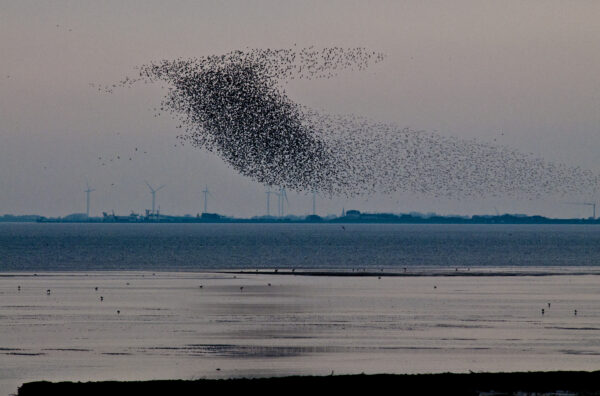
The 2023 assessment is a direct outcome of this long-term investment in cooperation. It shows how sustained collaboration can deliver the knowledge needed to guide policy and conservation action at an international scale. Just as importantly, it highlights how the Wadden Sea, at the heart of the flyway, serves as a critical hub connecting ecosystems and people across continents.
From assessment to action
The message emerging from the report is clear. Monitoring alone is not enough. The knowledge generated must now be translated into stronger protection, better management of coastal wetlands, and more effective policies across the flyway.
This includes improving site protection, addressing key pressures such as habitat loss and climate change, and investing in long-term monitoring and research—particularly in regions with existing data gaps. It also requires stronger political recognition of the flyway approach, ensuring that conservation efforts are coordinated across borders rather than fragmented.
A shared responsibility for the future
The East Atlantic Flyway Assessment 2023 is more than a scientific milestone. It is a reminder that migratory birds connect continents, cultures and communities—and that their future depends on our ability to work together.
For VISION 52, this assessment reinforces a central conviction: meaningful conservation at scale is only possible through partnership. The Wadden Sea Flyway Initiative demonstrates that such collaboration is already delivering results. The challenge now is to build on this foundation and turn knowledge into action.
The East Atlantic Flyway Assessment 2023 will also serve as a major foundation for our new book on the East Atlantic Flyway, which will present visions and perspectives for action. At our upcoming East Atlantic Flyway seminar on Langeneß, we will hear more about future plans of the Wadden Sea Flyway Initiative.