working with nature rather than against it
France is increasingly emerging as a leading pioneer in climate-adapted coastal protection in Europe. We learned this from coastal expert Gwenal Hervouët during our 4th East Atlantic Flyway Seminar in April on Hallig Langeneß. His presentation offered fascinating insights into the innovative work of the Conservatoire du Littoral and its vision for the future of Europe’s coasts.
Founded in 1975, the Conservatoire du Littoral protects coastal landscapes through public land ownership and long-term ecological management. Today, it safeguards more than 200,000 hectares of coastal habitats across France and its overseas territories, including tidal bays, salt marshes, dunes, lagoons, estuaries, and wetlands of enormous importance for migratory birds along the East Atlantic Flyway.
What makes the French approach particularly remarkable is its guiding principle: coastal protection should work with nature rather than against it. Instead of relying exclusively on ever-higher dikes and heavy infrastructure, the organisation promotes nature-based solutions that enable coastlines to adapt dynamically to rising sea levels and more frequent storms.
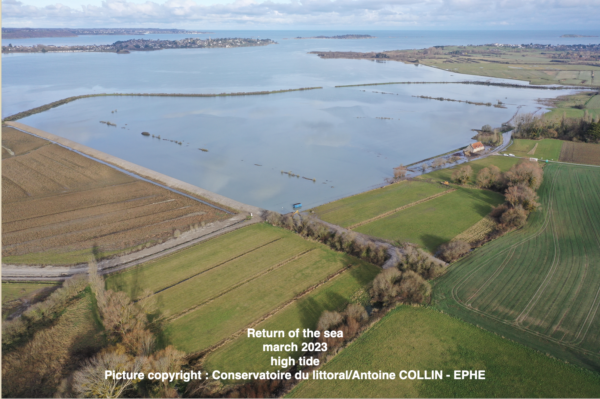
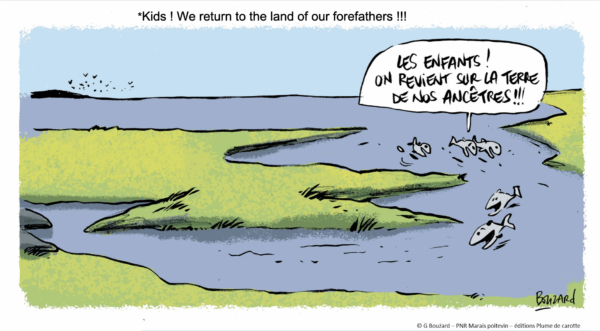
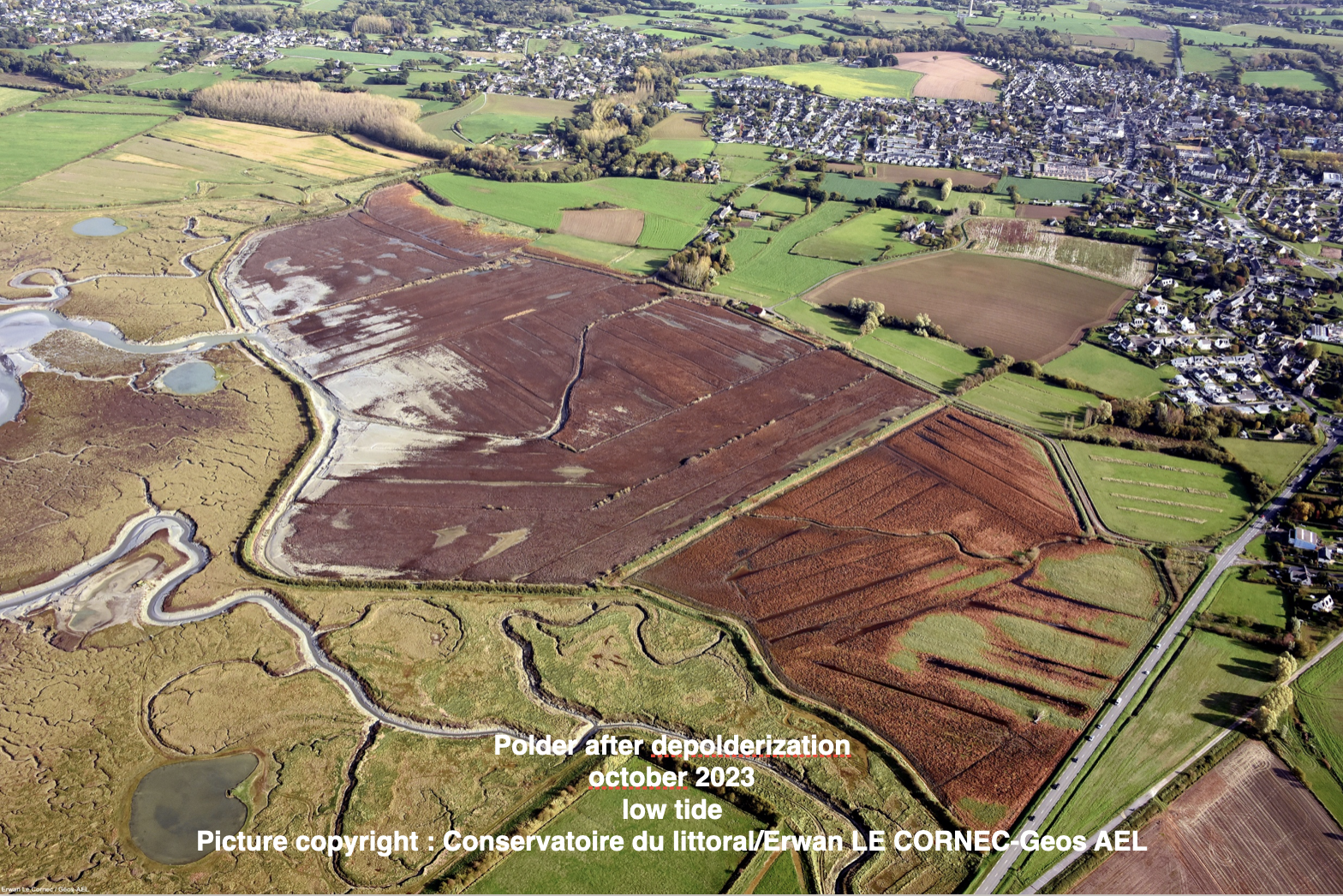
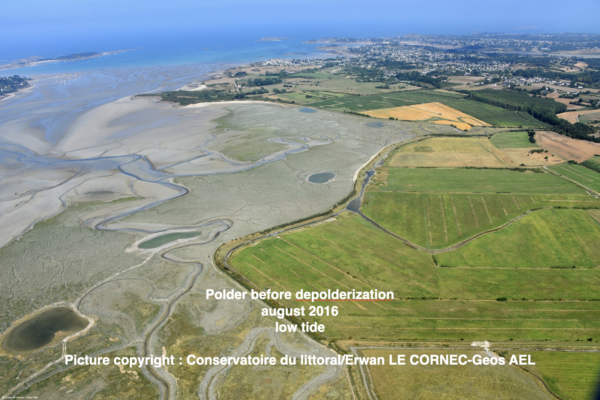
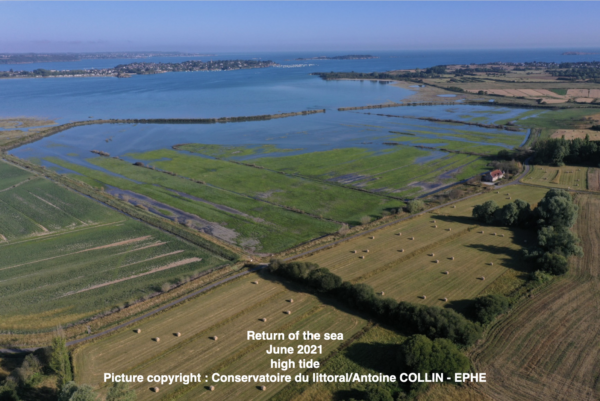
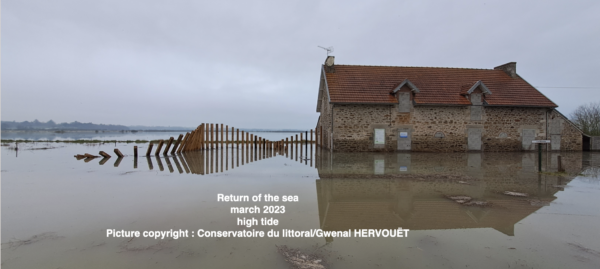
One of the most innovative concepts is the controlled reopening of former polders and diked areas to the sea. By allowing tidal processes to return, new salt marshes, mudflats, and coastal wetlands can develop naturally. These ecosystems not only provide highly valuable habitats for migratory birds, fish, and other wildlife — they also absorb wave energy, store carbon, improve water quality, and create more resilient coastal landscapes.
The Conservatoire’s work is strongly based on long-term thinking, scientific cooperation, and close collaboration with local communities. Farmers, fishermen, local authorities, conservation groups, and residents are actively involved in planning processes to ensure that ecological restoration and social acceptance go hand in hand. The organisation also cooperates closely with scientists to monitor how restored coastal systems evolve over time and how biodiversity responds to these changes.
For the East Atlantic Flyway, these developments are of outstanding importance. Many of France’s great tidal bays and coastal wetlands are crucial stopover and wintering areas for Arctic migratory birds. As climate change accelerates and coastal habitats disappear elsewhere in Europe, the restoration of dynamic coastal ecosystems may become increasingly essential for the future of many flyway species.
The story of this inspiring French approach will now become a dedicated chapter in our planned second book, “The East Atlantic Flyway – Perspectives and Visions”. We are grateful to Gwenal Hervouët for sharing these important insights and helping us better understand how climate adaptation and biodiversity conservation can work together successfully on a European scale.